
Selected publications (2016 onwards)
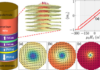
Magnetic field sensors are widely used for contactless current measurement, as well as in the automotive and robotics industries for position encoding. Vortex sensors are particularly attractive for these applications because of their linear response and weak temperature dependence. Conventional vortex sensors are sensitive to magnetic fields applied in the sensor plane. We developed a […]
Read moreSpin waves in cylindrical magnetic conduits: from theory to experiment (July 27th, 2026)
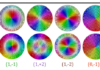
Spin waves are propagating fundamental excitations of magnetic systems, also carrying promises for low-power logic and data transfer. We report the measurement of thermal spin-wave spectra in single cylindrical nanowires, and their quantitative analysis as modes with a radial and azimuthal index. This opens the route for more elaborate investigations including generation, manipulation and detection. […]
Read moreE pur si muove!* (July 23rd, 2026)
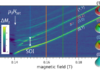
Angular momentum (AM) is the conserved quantity associated with rotational invariance. Harnessing its orbital component in axi-symmetric sample is often challenging. Interestingly, we show that azimuthal spin waves in normally magnetized disks are largely immune to imperfections that would otherwise prevent the wavefront from orbiting around the disk. * “And yet it moves!” is the […]
Read moreMagnetic vortex micro-disks dynamics in viscoelastic environments (July 15th, 2026)
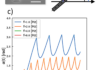
Magnetically driven microparticles provide a versatile platform for probing and manipulating biological systems. Yet the physical framework governing their actuation in complex environments remains only partially explored. In this work, we introduced a simplified model describing the magneto-mechanical response of such particles embedded in viscoelastic media under varying magnetic fields. For several years now, the […]
Read morePulse Shaping Suppresses Intrinsic Back-Switching in SOT-MRAM (July 05th, 2026)
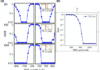
Spin–orbit-torque (SOT) MRAM writing exhibits an unusual current dependence: at high current amplitudes, the write probability can drop to zero or even oscillate as the current increases. In collaboration with Antaios, we showed that this behavior originates from an intrinsic, largely deterministic back-switching mechanism, and we demonstrated that tailoring the pulse fall time significantly widens […]
Read moreA one-way sound transmitter (December 08th, 2025)
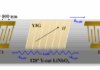
Magnetism is well-known to inherently break time-reversal symmetry; for example, the magnetization precesses in a single (counter-clockwise) direction around its equilibrium axis. By integrating a magnetic thin film onto a piezoelectric substrate, enabling phonons to hybridize with magnons, we show that this intrinsic nonreciprocity can be transferred to surface acoustic waves. Surface acoustic wave (SAW) […]
Read morePhysics of current-induced switching in 3D nanopillars (November 03rd, 2025)
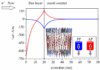
We simulated the current-induced switching of magnetization of short vertical magnetic nanopillars as the free layer in a magnetic tunnel junction. Considering spin accumulation is crucial in such 3D elements, leading to an enhancement of the field-like torque, and the excitation of non-uniform FMR modes. 3D nanomagnetism is a fast-growing topic, motivated by fundamental physical […]
Read moreControlling effective anisotropy for efficient switching at cryogenic temperature (October 24th, 2025)
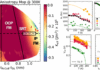
The field of cryoelectronics holds promise for high-performance computing applications, particularly within the realm of quantum computing. Recent advances in quantum computing systems have spurred the investigation of various technologies suitable for cryogenic environments. Among these technologies, spintronic memory elements have received significant attention due to their potential for minimal energy consumption. Specifically, these elements […]
Read moreImprinting of skyrmions and bimerons in an antiferromagnet (October 06th, 2025)
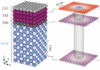
In this work, a consortium of physicists from SPINTEC and York addressed the challenge of nucleating quantitatively proven topological magnetic textures in compensated magnets with zero net magnetization. It paves the way for extending the study of topological spin textures beyond ferromagnets, into materials with intriguing electrodynamic properties, such as antiferromagnets and altermagnets. Topologically […]
Read moreMonolayer control of spin-charge conversion in van der Waals Heterostructures (September 16th, 2025)

2D materials and van der Waals (vdW) heterostructures are promising candidates to build efficient THz spintronic emitters. Here, we demonstrate the drastic modification of THz spintronic emission by inserting a single layer of MoSe2 in the PtSe2/graphene vdW heterostructure. Ab initio calculations indeed show the emergence of Rashba states due to the electronic hybridization between […]
Read more